
More Information
Submitted: August 17, 2026 | Accepted: August 22, 2026 | Published: August 24, 2026
Citation: Prabhakar V, Wankhade RL, Alam M. Assessment of Sustainable Composite Fly Ash Bricks Prepared using Kiln Wastes. Arch Case Rep. 2026; 10(8): 77-81. Available from:
https://dx.doi.org/10.29328/journal.acr.1001193
DOI: 10.29328/journal.acr.1001193
Copyright license: © 2026 Prabhakar V, et al. This is an open access article distributed under the Creative Commons Attribution License, which permits unrestricted use, distribution, and reproduction in any medium, provided the original work is properly cited.
Keywords: Sustainable bricks; Compressive strength; Durability

Assessment of Sustainable Composite Fly Ash Bricks Prepared using Kiln Wastes
Vikas Prabhakar1*, Rajan L Wankhade2 and Methab Alam3
1Department of Civil Engineering, Netaji Subhas Universty of Technology, New Delhi, India
2Applied Mechanics Department, Government Polytechnic Bramhapuri, & Former Associate Professor, Department of Civil Engineering, Netaji Subhas Universty of Technology, New Delhi, India
3Department of Civil Engineering, Netaji Subhas Universty of Technology, New Delhi, India
*Corresponding author: Vikas Prabhakar, Research Scholar, Department of Civil Engineering, Netaji Subhas Universty of Technology, New Delhi, India, Email: [email protected]
An increasing demand for sustainable construction materials is required for a reduction in the consumption of natural clay and an increase in the beneficial use of industrial waste. This study aims the investigation of the possibility of using Brick Kiln Dust (BKD) and fly ash as partial replacements of conventional clay for clay brick production. Brick specimens were prepared with different replacement levels of BKD (0, 5, 10, 15, 20 and 25%) and their physical, mechanical, durability and non-destructive properties such as unit weight, weight gain, apparent porosity, water absorption, compressive strength, modulus of rupture, sulfate resistance and Ultrasonic Pulse Velocity (UPV) were assessed. The results indicated that the increase in BKD content resulted in a decrease in the unit weight from 107 to 102 kg/m², an increase in the apparent porosity from 35.54 to 38.11%, and an increase in water absorption from 21.85 to 24.30. The compressive strength decreased from 9.13 to 5.95 MPa, and the percentage strength reduction after the sulfate attack increased from 16.6 to 25.9%. UPV decreased from 1944.34 to 1556 m/sec at higher BKD contents indicating less internal compactness. In general, low to moderate BKD replacement levels, especially 5–15%, provided a better compromise between waste utilization and engineering performance, while higher replacement levels require further adaptation. Besides, fly ash provides further opportunities for particle packing improvement, with environmental benefits and increased sustainability for BKD-based bricks. The proposed technique can lessen the reliance on fertile clay, prevent the dumping of brick-kiln waste and assist in the creation of greener masonry materials.
The construction sector is experiencing a notable shift toward sustainable alternatives to conventional materials. A particularly promising advancement is the creation of composite fly ash bricks made from kiln wastes, offering an eco-friendly response to significant environmental issues. Fly ash, a byproduct from coal combustion, is recognized for its ability to improve construction material properties while simultaneously reducing waste. This paper examines the sustainable use of fly ash in brick production, particularly its mechanical and durability attributes as noted in earlier studies [1,2]. Using fly ash not only aids in minimizing landfill waste but also enhances the performance characteristics of bricks. Research has demonstrated that adding fly ash to brick mixtures can lead to improvements in compressive strength, water resistance, and thermal insulation [3,4]. Additionally, technological advancements have allowed for the refinement of processing parameters, such as molding pressure and curing techniques, to optimize the advantages of these composite materials [5,6]. This research draws upon the extensive work of scholars exploring the incorporation of industrial byproducts in construction. Wankhade, et al. [7,8] have performed thorough investigations into non-destructive testing and the performance of concrete with various additives, highlighting the role of innovative materials in improving structural integrity. The use of supplementary materials, including steel fibers and alkali activators, further facilitates the creation of high-performance composites [9,10]. Wankhade, et al. [11] employed cement based Nano-SiO2 to improve mechanical properties of concrete. By examining the properties of composite fly ash bricks created from kiln wastes, this study aims to add to the dialogue surrounding sustainable construction practices and illustrate the potential for integrating industrial byproducts into mainstream building materials. The results will not only promote environmental sustainability but also foster the adoption of more resilient construction methods, paving the way for a greener future in the built environment.
The materials included fresh clay mixed with brick Kiln Dust for preparation of a brick. The specific gravity was measured according to ASTM D854 standards, yielding values of 2.50 for the clay and 2.41 for BKD, which correspond to densities of 1.32 gm/cm³ and 1.26 gm/cm³, respectively. The clay was blended with varying percentages of BKD: 0%, 5%, 10%, 15%, 20%, and 25%, representing a systematic approach to assessing the effects of partial substitution on brick performance. Details regarding the quantities of materials and the estimated water content are outlined in Table 1. Water was incorporated into the mixture and allowed to settle for 8 to 10 hours to achieve optimal consistency for shaping the bricks. After mixing, the bricks were air-dried for approximately two weeks, during which they were carefully stacked to enhance airflow and promote even drying. Following this initial drying phase, they underwent a three-week drying process in an industrial kiln, where the firing temperature was maintained at 800ºC for 36 hours. This controlled firing is crucial for developing the desired mechanical properties and durability of the bricks. A combination of coal, wood, and rice husk was utilized as fuel, introduced through small openings in accordance with the standard Bull’s Trench Kiln methodology, which helps achieve uniform heating and efficient combustion. This method not only improves brick quality but also leverages sustainable practices by incorporating waste materials as fuel.
| Table 1: Mix prepared with constituents in bricks. | ||||
| Mix designation | Clay (kg) | BKD (kg) | Fly ash kg) | Water (L) |
| Control Mix | 175.00 | 0.00 | 0.00 | 53.00 |
| Mix 1 | 158.75 | 8.65 | 8.75 | 53.50 |
| Mix 2 | 140.85 | 16.50 | 17.50 | 53.70 |
| Mix 3 | 125.50 | 26.25 | 26.25 | 53.90 |
| Mix 4 | 105.00 | 35.00 | 35.00 | 54.00 |
| Mix 5 | 87.50 | 43.00 | 43.75 | 54.25 |
Table 1 shows the mix proportions of clay bricks with BKD and fly ash at different replacement levels. The control mix contained 175 kg of clay and no BKD or flyash. The modified mixes have BKD in the range of 5-25% and fly ash at corresponding rates of 5-25% based on the original clay content. The quantity of clay decreases with the increase of replacement level with the increasing quantities of BKD and fly ash. A slight increase in water content from 53.0 to 54.25 L is adopted to ensure sufficient workability during mixing. Such systematic variation allows to evaluate the effect of BKD and fly ash on the performance of bricks.
The results of this study reveal a distinct pattern in the properties of bricks containing varying amounts of Brick Kiln Dust (BKD). As the BKD replacement percentage increased, several key characteristics displayed notable changes. Figure 1 shows constituents of clay brick, kiln dust and water.
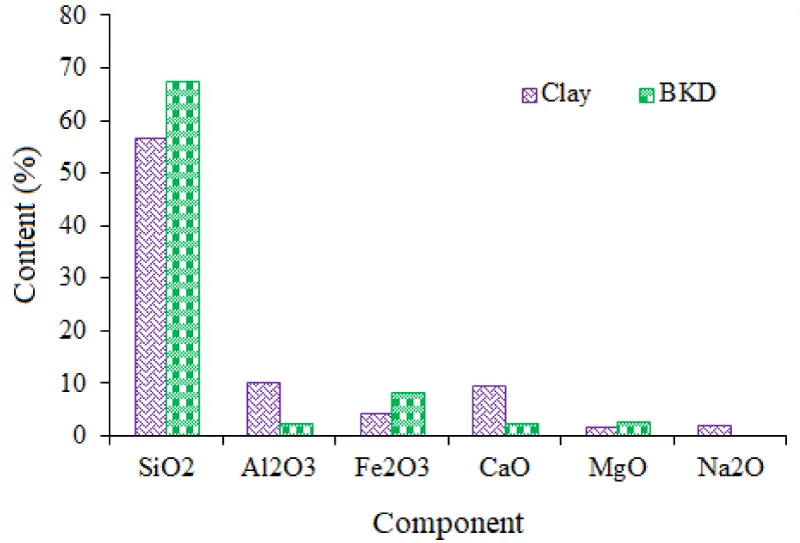
Figure 1: Chemical components of clay and BKD
Weight and weight gain
The unit weight of the bricks as shown in Figure 2 declined from 107 kg/m² at 0% BKD to 102 kg/m² at 25% BKD. This reduction can be linked to the lower density of BKD in comparison to fresh clay. The slight increase in weight gain percentages with higher BKD content indicates that the bricks absorbed more moisture, potentially affecting their overall density and performance.
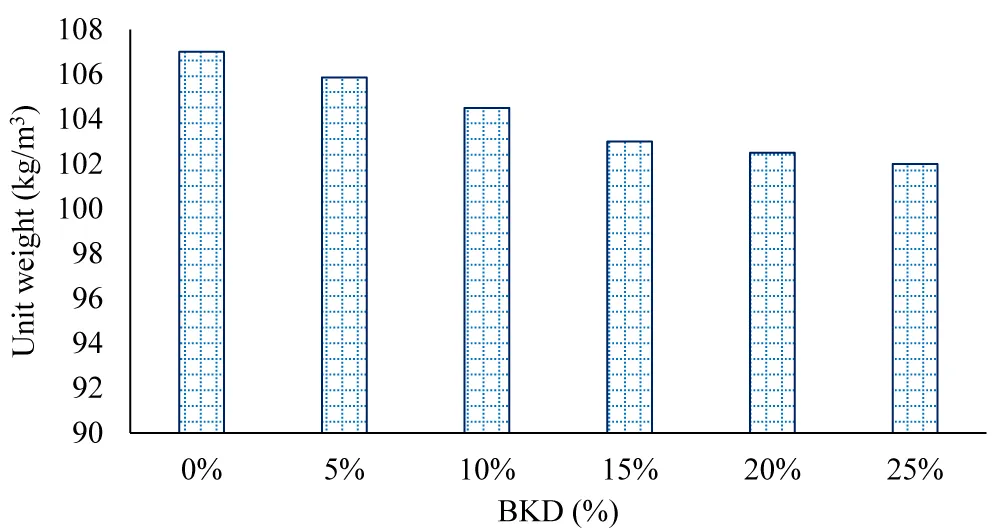
Figure 2: Unit weight of Bricks Incorporating BKD Replacement.
Apparent porosity and water absorption
Apparent porosity is shown in Figure 3 which rose with the addition of BKD. The apparent porosity increased from 35.54% at 0% BKD to 38.11% at 25% BKD, while water absorption went from 21.85% to 24.3%. This suggests that a higher BKD content may create more voids in the brick matrix, enhancing porosity but possibly compromising structural integrity. Elevated porosity typically correlates with decreased compressive strength, as seen in the results.
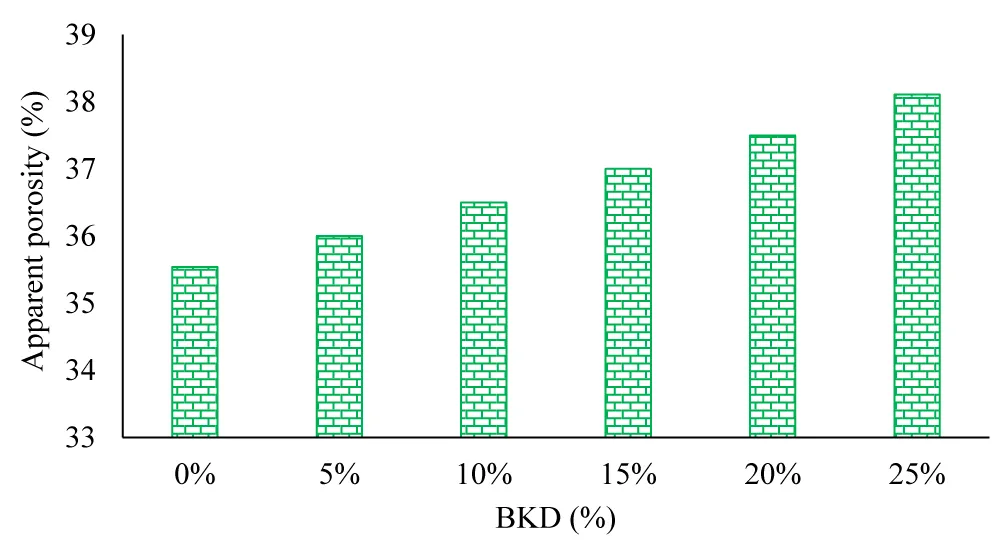
Figure 3: Apparent porosity as a function of Clay replacement by BKD.
Compressive strength and modulus of rupture
A significant decline in compressive strength was observed with increased BKD content, dropping from 9.13 MPa at 0% to 5.95 MPa at 25%. This reduction in strength aligns with the increased porosity and lower density of the bricks, indicating that while BKD can effectively replace clay, excessive amounts may weaken the load-bearing capacity. The modulus of rupture exhibited a similar decline, decreasing from 1944.34 MPa to 1556 MPa as BKD content increased. This trend reinforces the idea that while BKD has some beneficial properties, its overuse may impair mechanical performance.
Sulfate attack and ultrasonic pulse velocity
The results of Figure 4 also showed an increase in sulfate attack strength reduction, rising from 16.6% at 0% BKD to 25.9% at 25% BKD. This suggests that higher BKD levels may render the bricks more vulnerable to degradation in sulfate-rich environments, possibly due to soluble salts present in the dust. Ultrasonic pulse velocity (UPV) measurements, which evaluate material quality and homogeneity, consistently decreased with higher BKD percentages, further indicating compromised integrity.
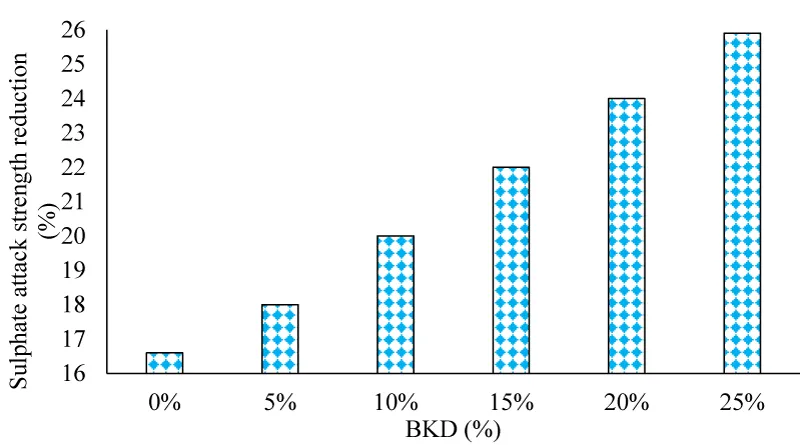
Figure 4: Sulphate attack strength reduction as a function of BKD in bricks.
Table 2. shows different roperties of bricks with replacement of BKD at different percentages.
| : Properties with replacement of BKD at different percentages. | ||||
| Replacement Percentage of BKD | Water Absorption (%) | Compressive Strength (MPa) | Modulus of rupture (MPa) | Ultrasonic Pulse Velocity (m/s) |
| 0% | 21.85 | 9.13 | 1900 | 1944.34 |
| 5% | 22 | 8.75 | 1890 | 1866 |
| 10% | 22.5 | 8 | 1850 | 1755 |
| 15% | 23 | 7.5 | 1820 | 1666 |
| 20% | 23.5 | 6.5 | 1800 | 1600 |
| 25% | 24.3 | 5.95 | 1780 | 1556 |
It is observed that the unit weight of bricks decreased gradually from 107 kg/m² at 0% BKD to 102 kg/m² at 25% BKD, which could be due to the lower density and lighter particulate nature of BKD in comparison with natural clay. Increase in weight gain with increasing BKD is slight indicating increased moisture uptake which is also consistent with the increase in porosity and water absorption found. Reduced weight however could be beneficial for lightweight masonry applications. As shown in Figure 3, the apparent porosity increased from 35.54% to 38.11% and water absorption increased from 21.85% to 24.30%, representing an increase of approximately 11.2% at 25% BKD. This behavior indicates that higher BKD incorporation allows for the formation of more interconnected voids due to the difference in particle size, density and packing characteristics, which helps moisture ingress and negatively impacts mechanical performance. The compressive strength progressively declined from 9.13 MPa for the control brick to 5.95 MPa at 25% BKD, a decrease of about 34.8%, and the flexural-strength parameter/modulus of rupture decreased from 1944.34 to 1556. The loss in mechanical strength is mainly due to the higher porosity, lower density, smaller effective load bearing area and weaker interparticle bonding at higher BKD content. Similar trend was observed for percentage reduction in strength due to sulfate attack which increased from 16.6% in control specimen to 25.9% for 25% BKD. This shows that the specimens are more susceptible to degradation by sulfate attack, perhaps due to the more porous matrix facilitating easier penetration of sulfate ions and presence of soluble constituents in BKD. The UPV also decreased from 1944.34 m/s to 1556 m/s (−20.0%) indicating that the internal compactness and the homogeneity of the material decreased gradually with the increase of the BKD content. The overall results show that the addition of BKD decreases the weight of the brick and makes an efficient use of waste. However, over-replacement has negative effect on porosity, water absorption, strength, resistance to sulfate and internal quality. Low to moderate BKD replacement, especially 5–15% replacement, seems more appropriate to balance sustainability and engineering performance, while higher replacement rates (20–25%) need further modification or stabilization. The use of BKD together with fly ash, lime, cement or other pozzolanic materials may improve the particle packing, decrease the porosity, improve the bonding and overcome the limitations associated with the higher incorporation of BKD.
The use of fly ash and BKD in bricks has major environmental, technical and economic benefits as it reduces the consumption of natural clay and promotes the use of industrial and waste materials. Fly ash can improve particle packing and pozzolanic bonding, and BKD can be used for resource conservation and waste reduction. But the quality and proportions of the constituent materials have very much to do with the performance of these bricks. Fly ash or BKD in excess may increase water demand, porosity and water absorption and decrease strength at early age. Waheed, et al. [1] similarly worked out the mechanical and durability properties of fly-ash cement sand composite bricks. ASTM C67-17 [12] provides methodologies for tests required for such bricks. Composition of waste also varies, affecting consistency and durability. Madghe, et al. [13] prepared bricks using plastic wastes and studied their durability properties. Hence, optimized proportions, proper mixing, curing and quality control are necessary to guaranty reliable brick performance.
Advantages of BKD fly ash bricks
There are many technical, environmental and economic benefits associated with employing fly ash bricks over conventional clay bricks. Fly ash is an industrial by-product used to reduce the consumption of natural clay and promote the beneficial use of waste materials. Also, the presence of BKD adds to the sustainability of the brick by reducing waste in the waste stream and reducing the need for virgin raw materials. Fly ash and BKD can be used in combination to improve the particle packing and reduce the internal voids which can result in better dimensional stability and surface finish. The pozzolanic material in fly ash may react with the calcium compounds available which may be the reason for formation of cementitious products which increase compressive strength and durability. These bricks may also have lower density and better thermal insulation properties as compared to conventional fired clay bricks. Moreover, their production can help reduce the accumulation of industrial and agricultural waste, preserve soil resources and possibly reduce energy use and related CO2 emissions. Therefore, BKD–fly ash bricks can be a promising sustainable alternative for environmentally responsible masonry construction.
Relevnt limitations of fly ash bricks with BKD
Variability of raw materials: Fly ash and BKD sources can have a great deal of variability in their chemical composition which can affect the uniformity of brick properties.
Increased water demand: Higher levels of BKD and fly ash may require more water to keep the mix workable and this may affect strength development.
Replacement maximum limit: Excess (more than optimum) may result in reduced compressive strength due to poor bonding of clay.
Processing sensitivity: Proper curing and uniform blend are important. Poor processing results in cracks and poor dimensional stability.
Limited standardization: Limited data on standardized mix design and long-term performance of BKD based bricks.
Disadvantages of BKD fly ash bricks
These bricks show lower early strength as compared to traditional fired clay bricks in inappropriate curing conditions.
Higher replacement levels of BKD may increases water absorption and porosity. It may impact on durability.
In some areas the supply of materials is determined by the availability of industrial waste.
It is observed that heavy metals can be present in fly ash and these must be controlled for quality and environmental safety.
The first implementation would be more complex and more costly to the manufacture. It is because of more quality testing and characterization would be needed.
Using Brick Kiln Dust as a partial substitute for clay in brick manufacturing offers both advantages and challenges. The present work shows that Brick Kiln Dust (BKD) can be effectively utilized as a partial replacement of clay in brick making, a sustainable approach for waste valorization and conservation of natural clay resources. However, the results presented clearly show that the gradual increase of the BKD content affects the physical, mechanical and ultrasonic properties of the bricks. Water absorption increased from 21.85% in the control brick to 24.30% at 25% BKD, which is an increase of about 11.2%. Thus, increased BKD contents can lead to higher pore volume and connectivity within the brick matrix. The compressive strength showed a progressive reduction from 9.13 MPa for control mix to 5.95 MPa at 25% BKD, which is approximately 34.8% reduction. The modulus of rupture was decreased from 1900 to 1780 with the increase of BKD from 0 to 25%. It indicated the flexural performance was gradually decreased. The decrease can be related to the lower bonding and higher internal porosity at higher BKD contents. The Ultrasonic Pulse Velocity (UPV) was from 1944.34 m/sec for the control specimen to 1556 m/sec at 25% BKD, which is a reduction of about 20.0%. Decreasing At high replacement levels, especially 20-25%, the strength and internal quality are significantly degraded. Therefore, BKD is a great potential sustainable clay substitute in bricks.
Authors contributions
Vikas Prabhakar: Conceptualization, writing — original draft, methodology, writing — review and editing.
Rajan L. Wankhade: Writing original draft, writing — review and editing, visualization, supervision.
Mehtab Alam: Formal analysis, investigation, data curation, writing — original draft, writing — review and editing.
Data availability statement: The experimental data can be made available from corresponding author upon request.
Data availability: Data can be made available upon request.
- Waheed A, Azam R, Riaz MR, Zawam M. Mechanical and durability properties of fly‑ash cement sand composite bricks: An alternative to conventional burnt clay bricks. Innov Infrastruct Solut. 2022;7:1‑12.
- Bai Y, Guo W, Wang J, Xu Z, Wang S, Zhao Q, Zhou J. Geopolymer bricks prepared by MSWI fly ash and other solid wastes: Moulding pressure and curing method optimisation. Chemosphere. 2022;307:135987. Available from: https://doi.org/10.1016/j.chemosphere.2022.135987
- Jadhav P, Gite A, Wankhade R. Strength characteristics of Fe‑SMA reinforcement in RC beam with experimentation and finite element modeling. Commun Sci Lett Univ Žilina. 2023;25(3):D54‑70.
- Prabhakar V, Alam M, Wankhade RL. Evaluation of strength and modulus of elasticity (Ec) of concrete incorporated with recycled aggregate and rice straw ash (RSA). Constr Build Mater. 2024;448:138016. Available from: https://dx.doi.org/10.1016/j.conbuildmat.2024.138016.
- Zhou J, Wu D, Zhao T, et al. Pressure and creep characteristics of waste fiber recycled concrete and estimation model. J Civil Environ Eng. 2019;41(6):143‑51.
- Tan Y, Peng Y, Wu H, et al. Uniaxial compressive constitutive relationship of recycled concrete under different substitution rates of recycled fine aggregates. Concrete. 2019;(03):65‑70.
- Wankhade RL, Landage AB. Non‑destructive testing of concrete structures in Karad region. Procedia Eng. 2013;51:8‑18.
- Wankhade RL, Landage AB, Konnur BA. Experimental investigation on combined effect of SBR and steel fiber on properties of concrete. Int J Eng Res. 2016;5(1):257‑61.
- Shivali RB, Wankhade RL, Goldar D. High performance FRC tunnel lining with alkali activator and cementitious materials. In: Vilventhan A, Singh SB, Delhi VSK, eds. Advances in Construction Materials and Management. Lect Notes Civil Eng. Vol 346. Singapore: Springer; 2023. Available from: https://dx.doi.org/10.1007/978‑981‑99‑2552‑0_37.
- Hussain A, Wankhade RL, Singh HE. Enhancing the properties of self‑compacting concrete by using steel and polypropylene fibers. Pract Period Struct Des Constr. 2024;29(3):1‑13. Available from: https://dx.doi.org/10.1061/PPSCFX.SCENG‑1460.
- Wankhade RL, Harle SM, Sagane SC, Nistane HP, Konlade A, Gohatre VS. Enhancing the mechanical properties of cement‑based materials using nano‑SiO2 and mechano‑chemical activation. Macromol Symp. 2026:e70431. Available from: https://dx.doi.org/10.1002/masy.70431.
- ASTM C67‑17. Standard test methods for sampling and testing brick and structural clay tile. West Conshohocken (PA): ASTM; 2017. Available from: www.astm.org.
- Madghe P, Berad H, Roy A, Vaidya N, Sakharwade N, Wankhade RL. Use of waste polymers in a plastic bricks as sustainable building and construction materials. In: Gupta AK, Shukla SK, Azamathulla H, eds. Advances in Construction Materials and Sustainable Environment. Lect Notes Civil Eng. Vol 196. Singapore: Springer; 2022. Available from: https://dx.doi.org/10.1007/978‑981‑16‑6557‑8_62.